Saturday, June 21, 2014

Live Love Laugh

A cursory Internet search leads me to conclude that most people track the source of the popular saying––Live, Love, Laugh––to the poem "Success," written in 1904 by Bessie Anderson Stanley. But in that poem, the words are not in the same order, but occur, "lived … laughed … loved," past tense. And yes, some of the renditions place the words in the order, Live Laugh Love. Plus, right or wrong, there are various other derivations and attributed sources as well. 

But no one mentions a song.

By now the saying Live Love Laugh goes beyond copyright, but the exact phrase is embedded in a song, recorded by many artists and written by Harry M. Woods.

How did this connection occur to me? Driving by, I saw a red robin splashing in the street's gutter and the next thing, I'm singing aloud:


When the red, red robin comes bob, bob bobbin' along
There'll be no more sobbin' when he starts singin' his old sweet song.
Wake up! Wake up, you sleepyhead
Get up, get up, get out of bed
Cheer up, cheer up, the sun is red
LIVE, LOVE, LAUGH and be happy …
 
Photo courtesy of Scott Liddell


Aha! Who knew? And now you do, and that makes me happy.


Thursday, June 12, 2014

Let It Go

Instead of whistling while I worked, I kept humming and singing "Let It Go."

More than a messy closet

A week ago today, I tore into my closet, a job long overdue and much dreaded. Good thing my husband went with our son-in-law to spend the night at his ranch.

Last Thursday, after 9,940 steps on my Fitbit, I did not uncover my bed until 10:54 p.m. You have to make a bigger mess to clean a mess, and mine had been accumulating, gaining ground, burying me under too much stuff. 

Only that day was just the beginning.


People can get used to anything.


My bed is under there somewhere


Almost empty


Lunch Break 

Before my husband left for the ranch, I confessed my sin. 

"This is psychological." And even as I try to admit my problem, I feel as though I'm hiding behind fig leaves. I'm ready to cry.

"I thought you were just cleaning your closet," he said. 

No. I am tortured by this mess. By insecurity, this need to have more than I need. Some kind of buffer against deprivation. Both my daughters recognize and associate my pathology with "whatever happened to you in childhood." 

Yes. Adult children of alcoholics develop ways of coping with fear and insecurity. In the back of my mind as I worked is what my husband has said repeatedly. 

"You can't tell the difference between what's important and what isn't." 

So everything becomes overly important, things too important to part with because of what some keepsake represents to me. Not to mention clothes I no longer wear. How's that for tip of the iceberg analysis?


My Crazy Heart

In the movie Crazy Heart,  the character Jean Craddock, played by Maggie Gyllenhaal says to Bad Blake, played by Jeff Bridges, "Living with you is like living with a rattlesnake." 

The fear of stepping the wrong way, saying the wrong thing, when all you want is to go your way, survive, that fear is crippling for persons who live with an alcoholic, or in my case grew up living with an alcoholic. Today I have oodles of empathy for what caused my parents to drink, but the effects on me have remained. 

My husband and eldest daughter tell me. "If you died today, it would all get hauled off."


A Crisis of Belief


Do yourself and everyone you love a favor. Let it go.  


… I finally can breathe. 
 I know I left a life behind
But I'm too relieved to grieve


Earn its place


My eldest daughter recently emptied her closet, saying that everything she put back once it was emptied had to "earn its place."

Edit as you go


Bonus Round


My youngest daughter came and helped me organize office space, which is why I can sit down and write this blog. But the real reason I share this cathartic experience has to do with the weight lifted and the freedom I feel now that this job is done. 

Now I can think. And play. And write. Ta-dah!


Where I sit to blog

Sunday, March 30, 2014

G.W. in Lubbock, America


Picture taken through glass gives the appearance that the President has lost some hair. No, he still has a full head of hair.

"This ain't my first rodeo."

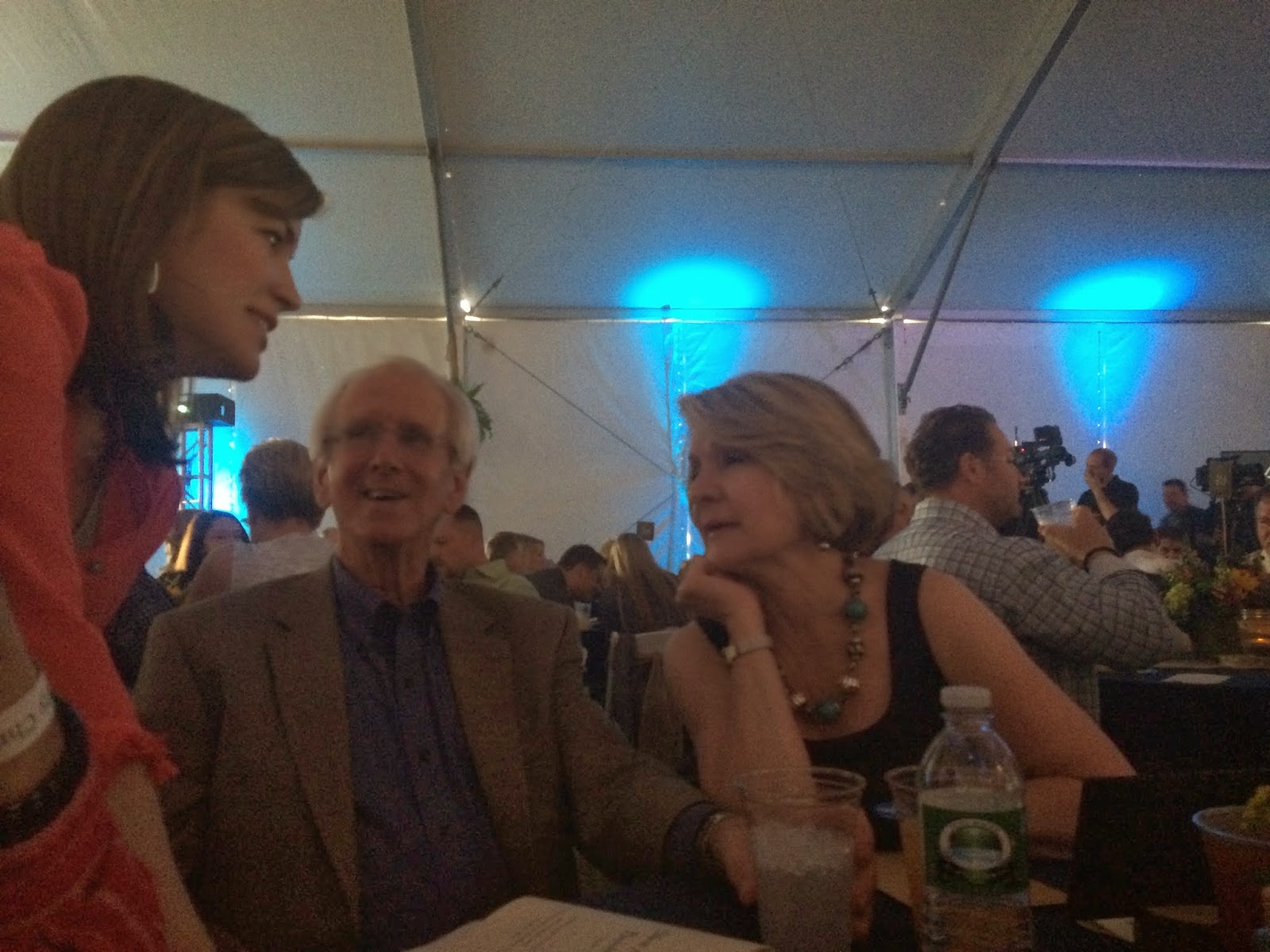
On Thursday, President George Bush spoke at the fundraiser for Trinity Christian School, where 4 of my grandchildren attend. Before a sellout crowd of 1500 seated in a tent the size of a football field, with Texas barbeque and a silent auction, the former President's presence made Spirit Ranch the best place to spend the evening in Lubbock, America.
Rt: grandson, Beck (one of the twins)
pictured here with friend, Ellie and the Trinity mascot

Seated in a comfy chair in front of a black backdrop, where a fireplace and other furnishings created a homey setting, George or G.W., spoke as he would in the living room of a friend. No cameras or recording devices were permitted once the event began, and perhaps that contributed to the relaxed atmosphere. 

The setting
At one point when the moderator asked if President Bush got to see his twin daughters much, he said, "No, they both live in New York. I hate New York. I'd rather come to Lubbock."

That says something considering the 30+mph winds that afternoon, and the dusty field where the tent was set up along with the parking lot across the highway where guests could catch a ride on a golf cart to avoid at least some of the dirt that clings to boots and jeans. Springtime in Lubbock includes a bit of dust and wind, but the people make up for what the geography lacks. 
At 4:00 p.m. it was as dusty as the tail end of a cattle drive. By 8:00 p.m. a glorious twilight.


Family Life

Speaking of his daughters, the President acknowledged that his girls had tested parental limits as teens. He stressed unconditional love as the most important aspect of parenting. 

G. W., the father, told Jenna and Barbara, "I love you. There's nothing you can do to make me not love you. So stop trying."

And speaking of his wife, Laura, when the moderator asked, "What's it like living in the White House?"

His answer, "What's it like living in a museum? It's cold and isolating. But Laura made it warm and comfortable." Promoting literacy and reading, among other things, Laura brought children to the White House to watch movies.


People who influenced the President

"We had a joyful White House," which President Bush attributed to the people who aided him. "I'm not afraid of making decisions. [But] no one person can know everything. I believe in the Socratic method––learn by asking questions. You surround yourself with people who know [things] you don't, people who know they are needed. Patriots, first and foremost. And secondly, those who have a sense of responsibility."

Politics is noble

The first thing President Bush said was that he would not criticize a sitting President or demean his administration. Later, when asked about the attacks made on him during his presidency, he said that he was disappointed, not hurt, because what hurt him was to hear his dad criticized during his term as President. 

"I understand the process; consequences for decisions, I understood." But he objects to elected leaders "sullying the process," which sends the signal that "politics is not noble." While admitting what he referred to as "truth––I should have been more circumspect in my language––I said 'mis-underestimate' in a press conference, generally I didn't pay attention" to critics.

Know what you believe. Listen carefully. Base decisions on principles. Give people access to inform  decisions were key values President Bush stressed. In fact, that's what distinguishes George W. Bush, in my estimate. Core values and principles guide his politics as well as his personal life.


The President's Legacy

"America is not a nation of revenge. We're a nation of justice." This President Bush said in response to questions about 9-11, the defining moment of his presidency, and now memorialized as the centerpiece of the Bush Library. He compared that event to the previous generation's experience of Pearl Harbor. 

He described the horror of 9-11, saying, "Evil exists. It is real … The human condition elsewhere matters to National Security. Where tyranny exists, there is hopelessness." He spoke of the danger of isolationism, "creating vacuums where evil then enters." He believes that the advance of freedom for all––"marginalize hate"––offers hope to oppressed peoples everywhere.

When the President walked among the ruins of the Twin Towers after 9-11, he compared walking into the hole at Ground Zero to hell. 

"I don't know what hell's going to be like. I don't intend to go." But, that pit felt like hell was his point.


He spoke about the 3 hours he spent there comforting those who hurt. "I didn't want to be the one to break the news," that their family member had not survived. Instead, he gave hugs. It seemed an anguished moment for him to even speak of that time.

"You're hermetically sealed as President. You don't see citizens … [but then] I saw the horror, the shock on parent's faces."

"I was in a classroom with children when I got the word on 9-11 … I overruled the Secret Service when 'Angel,' code for the White House," since no one knew if the White House would be attacked next. "But I didn't want the country to see me cowering in a bunker. I wanted to speak from the Oval Office. In a crisis, 2 things. Project calm. Do nothing. Secondly, say something. Fill the void with some kind of assurances."

And fill the void, President Bush did throughout his presidency and again on Thursday evening. 

Faith

Since leaving office, the president said "It's harder when you're comfortable, surrendering when you have an ego like mine. Prayer, with an uncluttered mind … Faith is very important to me. Comforted by prayer as President, [it] was an unbelievable experience."

"It's a precious freedom to worship as we see fit, if not all do. Public policy [also] protects the right NOT to worship; a sacred right, freedom of religion."

"My favorite verse is speck/log," a reference to Jesus saying in the Sermon on the Mount, (Matthew 7), "Don't be judgmental. Be careful, those who think they're better. We're all sinners … Be guarded when you yourself have your own flaws."


Future Exploration

The former president shared that he has started painting. Inspired by an essay he read by Churchill, "I paint a lot. Unbelievable experience. Do it. Don't just lament. Pick something and do it."

"Explore to the last breath of your life."


Family matters

People waiting to use the "Royal Thrones"

Catered barbeque


Wednesday, March 12, 2014

Meet Bob Goff and Love Does

Bob said he thinks Jesus will touch people on the nose when he meets them face-to-face.


Julie, a writer friend

Julie, Donald, Petie and Bob

In the beginning, a girl named Julie introduced me to Donald Miller via his book Blue Like Jazz. Read and passed on to my son John, he too became a big fan. Then I read the other books by Miller, including my favorite, A Million Miles in a Thousand Years. This book too I shared with family and friends, including my friend Petie, who when she returned my copy, told me that Bob Goff, who factored prominently in Donald Miller's book, was someone she and her husband and their 3 sons knew when they lived in San Diego some 25 years ago.

Bob Goff actually met "Sweet Maria" in my friend Petie's living room. Bob fell in love with Maria that night and eventually convinced her to marry him.

When Bob Goff wrote Love Does, my friend Petie bestowed upon me a copy, as giddy when she gave it to me as if she had written the book herself. In turn, I gave away 10's of copies. Is that a good way to put it? Well, far more than 10 yet less than a hundred.


Behind the book is a person


Last week, I met Bob Goff face-to-face. My friend Cynthia offered my husband and me places at the table they had reserved where Bob was the speaker. Cynthia nudged me, "There he is," knowing I had driven 120 miles from Lubbock to Amarillo to meet Bob Goff.
My friend Cynthia took this picture of Bob and me

"I'm Petie's friend."

"I'm a hugger," he said, bending down to engulf me in the kind of hug you hate to let go.

"Ah, Petie and Doc," Bob said. "It all started in their living room," referring to his story of life with wife, Sweet Maria. (See chapter 7)

And suddenly I could see connections, circles inside circles, where people meet, their lives intersect or parallel for a time, for moments or for years, and the impact of some incidents ripple to unimagined outcomes. Unforeseen to me that day in the parking lot at DTS when Julie told me to read Donald Miller's book, one day I would find myself seated at Storyline conference in June of 2012, listening to Donald Miller (see previous post), someone whose ideas fascinate as well as resonate. 

Storyline conference in Santa Barbara, CA June 2012

Same with Bob Goff. When I told Bob Goff that I had attended Storyline in Santa Barbara, with hopes he would be there too so I could tell Petie I met her friend, he offered without coaching to follow what I was saying, "Yeah, I was in Canada." Back then, Donald Miller shared stories about Bob, even in his absence.

I took this shot of the screen when Donald Miller told people about Bob


Same little boy lifted up, like the movie UP, by a thousand helium-filled balloons
"I used to think…but now I know…"


Including the story about the boy from Uganda that Bob has since adopted. Adopted after Bob secured for this child a delicate operation to repair/replace what the Ugandan Witch Doctor had cut off, leaving the child to die. Only the boy didn't die and connections were made, need and provision matched, a real doctor working miracles. Bob recently took this 10-year-old son on a trip to climb Mount Kilimanjaro. UP. Way, way UP.

Bob Goff does. He practices the message he preaches in Love Does. As Bob's book describes his story, "I used to think, but now I know …," he illustrates that the narrative of our lives should flow from grace with an openness both to God's message to us as well as expressed through us.  

So if per chance in this world of Internet connections you should meet Bob Goff here, there or anywhere, tell him that a girl named Carol told you that he's a great guy and you should read his book, Love Does.

"Go do stuff," he said the night I heard him speak. "Be not afraid. Just live extravagantly."

He added. "If you've got a guide you can trust, you don't need to see where you're going."


Friday, November 22, 2013

11/22/63

C.S. Lewis, who died less than one hour before President John F. Kennedy was shot, wrote in The Magician's Nephew, "What you see and what you hear depends a great deal on where you are standing. It also depends on what sort of person you are."

Today's date speaks to everyone who lived through the events 50 years ago no matter where they were standing. No one stood in exactly the same place, and today none of these people I will write about here have any connection to one another except the death of their president. And that they told me their story. These  people have sealed in the vaults of memory their own newsreels of that ominous day.


Meet David––"A primary source of data"

David is my brother-in-law, whom I have known for over 40 years.  Fifty years ago today, he and 3 of his friends were among the throngs that turned out to see President and Mrs. Kennedy arrive first at Love Field in Dallas. Afterward they sped downtown to situate themselves on Market Street under a viaduct, where "We knew the driver would make a hard right turn and we'd get a really good look at the president." These 4 high school seniors knew how to navigate the surface streets of Dallas.

They had skipped school that day after persuading their teacher in "Problems of Democracy" class to let them do some first-hand research on their project "Subversive Organizations in the U.S."

At Love Field, David said, contrary to expectations, there were no protest signs. "The sky was blue. He was the most handsome man I'd ever seen," he said, "and she, the First Lady, was stunning. I had never seen fashion like that. They both looked so happy."

By coincidence, he says, the street where these 4 students later parked was "exactly the street to take to Parkland Hospital. We were standing about 15 feet from his car when it sped past us. I saw his wound … there was no backside of his head. Horrible. Really emotional … 45 minutes earlier seeing this vibrant man and now," as David tells this story to me he says he remembers "a big bloody piece of nothing."

The 4 guys jumped into their car and followed the president's limo to the hospital. "We thought it was weird that it [the limousine] didn't slow down." The Press Corps behind the limo got caught in traffic.

Senator Ralph Yarborough and Mayor Earl Cabell were in the second car. David said he talked to Yarborough, "who was crying, inconsolable." And later, it was Yarborough who told the press to talk to David and his friends.

"These boys saw him," Yarborough said.

David said, "And then the press swamped us." David's friend Will had used his student press pass to get into the hospital press conference. "He had an ABC News Press card and went to the official press conference."

Meanwhile, in a second limo, in the backseat, the roses presented earlier to Jackie Kennedy lay strewn across the backseat.


The photo on the right shows what David was looking at: Jackie's roses. You can almost see in his expression and body language the wheels turning––should I or shouldn't I?


"I reached into the limo––I can't believe I had the nerve. There was blood on the rose I got."

The next thing he did was turn on the radio in the limo. "We didn't know what was happening… We heard Walter Cronkite saying," and here David couldn't finish his sentence. After a pause, he said, "I knew he was dead."

This picture of David ran in the Houston Chronicle on the front page of the 25th Anniversary of the assassination, November 20, 1988.

David has framed the blood stained rose as well as newspaper clippings and prints made from his friend's camera.


Dallas Times Herald, November 22, 1963


Behind the policeman, a man moves the glass bubble that could have shielded the president, but President Kennedy had asked that the bubble top be removed.


Crowd gathered outside Parkland Hospital Emergency Room

At the hospital, David's friend, Charles, took pictures with the camera he had brought with him that day. By the time reporters got there, people (Secret Service or local cops?) had cleaned up the car. They wiped off blood, took the top out of the trunk, put it on and drove away the limo Kennedy had been riding in. Charles, who later became a lawyer, started negotiating with reporters, who bid on his camera "sight unseen" and paid $700. for its film, with Charles retaining first prints and credits for any photos used.

"When I testified, 10, 15 or 20 years later," David said, "I flew into Dallas to the museum to record a filmed testimony. The only thing interesting [to them, those who questioned him] was that President Johnson came out surrounded by Secret Service men, guns out, and loaded him into a VW Beetle with at least 4 agents with him. They covered him with their bodies."


Meet Dr. Bob McClelland, a friend of a friend

I met Dr. Bob McClelland this past summer, a mutual friend introducing us, because she knew I had been particularly interested in the Kennedy history. Sitting around my friend Norma's kitchen table with her husband Royce, also a doctor, and their son Todd and my friend Pat, Dr. McClelland shared with us his first-hand testimony of that day in Trauma Room #1 at Parkland Hospital. Bob and Royce have been friends and colleagues for over 50 years.


This is the shirt Dr. McClelland was wearing that day, the shirt he has preserved, he says, because he once saw a piece of clothing in a museum that was stained with President Lincoln's blood after he had been shot.

"To start," he said, "with a worm's-eye view in the OR, 2 days after my 34th birthday, I had been on the surgical faculty [of Southwestern Medical School] since 1962. I was in a conference room showing a movie to senior residents on how to repair hernias."

Dr. Crenshaw said, "Mac, will you step out here? Got a call to ER. They're bringing President Kennedy in."

"He and I got on the elevatior, rode 2 floors down, trying to cheer each other. The door to 'the Pit' opened," a space he compared to the size of Norma's kitchen and den, with patient cubicles separated by curtains off that hallway. "Trauma rooms 1, 2, 3, and 4 were opposite, where we took seriously injured patients."

"What I saw … the area was jammed with people, men in business suits, a sea of hats … the crowd parted [to let them pass]. On a chair outside Trauma room 1, Mrs. Kennedy was sitting … I walked toward her. I forced myself."

"Oh, no," I thought. "I was it, or so I thought."

"There were 4 of us [doctors] inside now, and Doris Nelson, the nurse in charge of the ER." Later, Parkland hospital records would indicate 6 doctors attended the president.

"A surgical drape on the president, I saw him lying, cut out of his clothing, covered in blood. It was a horrible sight. Dr. Malcolm Parry and Dr. Baxter were there, and I [was glad] I wasn't by myself. Parry on one side and Baxter on the other," Dr. McClelland stood at the end of the gurney, noting that the doctors were working on a wound "the size of my little finger in his neck." Did a bullet hit the carotid artery? he wondered.

"Dr. Carricho put a tube in the trach [tracheotomy]. He was a resident at the time, but later he was chief of the department."

Here, at this point in the conversation, Dr. McClelland reached up and touched his own head near the crown, indicating where he saw "a huge hole in the back of the President's head." He thought before he spoke, "The right side of his head is gone, meaning the right half of the cerebral hemisphere is gone. However, he was breathing and had good cardio on the monitor."

The doctors completed exploration of the neck wound, about 6 minutes spent, he said, before they cut Kennedy's chest open and Mac [Dr. McClelland's nickname] massaged his heart.
Here Dr. McClellan looks at one of the countless books he has read about the assassination of JFK. The plastic bag contains the shirt he was wearing while he treated President Kennedy in the Parkland ER

Dr. Clark, a neurosurgery professor, noted that the ECG monitor had straight-lined. "Mac, you can stop now. The President is gone."

"Shows how news media can bend things," Dr. McClelland said. "Mrs. Kennedy wasn't in the room when Dr. Clark made his pronouncement." With that, he said, the crowd left the room.

"Dr. Baxter and I were shoved up against the wall of the trauma room, after the others left. Just as we got around the cart, a priest came in. Couldn't knock him down, could we? Father Huber, there to administer Last Rites. He bent down to the President's left ear, saying 'If thou livest' and then his voice dropped."

"Next, the door opened and Mrs. Kennedy came in. I couldn't hear, but I surmised [that that the priest had given] 'conditional absolution.' She grimaced but said nothing. She exchanged the ring from her finger to his, and his to hers. She stood by the President's barefoot, leaned over and kissed his foot. Then she left the room.

This detail, which I had never heard mentioned or written, was the most poignant, personal aspect of what Dr. McClelland witnessed that day. 

Meanwhile, Forensic pathologist, Dr. Earl Rose, later described to Dr. McClelland what he had seen while sitting downstairs in his office. He looked out into the corridor and saw O'Neal funeral home arrive with a coffin. The president's body was brought out [up to that place in the hospital] to an ambulance on the same cart he had been treated on. Two Secret Service men walked in front and Mrs. Kennedy was on the side opposite her friends Kenny O'Donnell and David Powers.

"Dr. Rose stepped out of his office to stop them saying, 'I'm required by Texas law to conduct a postmortem on any murder committed in this state. Dr. Rose said a Secret Service man picked him up, and set him down and waved his finger [back and forth] in front of his face."

Besides being in Trauma room 1 when Kennedy was shot, Dr. McClelland was called in on Sunday to Trauma room 2 where Lee Harvey Oswald lay mortally wounded.

"That's where our personal part goes," Dr. McClelland said, noting that it would be years later when he saw the Zapruder film on Geraldo Rivera's show in the early 1970's that he began to question what had happened at Dealy Plaza that day. He and the other doctors who treated President Kennedy found themselves in the midst of a battle, in an undeclared war, treating the Commander-in-Chief of the United States of America. 


Meet Clint Hill, Secret Service Agent assigned to protect First Lady Jackie Kennedy

Earlier this week, I wrote about the book Mrs. Kennedy and Me, written by Clint Hill. Here, the view from where he stood that day reflects a different angle. Agent Hill continues to see things, not only in light of his protective detail's concerns, but also from his personal attachment to Mrs. Kennedy. 

Incidentally, later that same day I gave my book review, I was seated at lunch with a man whose uncle, a professor at Baylor University, served as a forensic expert at a mock trial held in Dallas. This man told me that his uncle actually got to examine the bullets, and his uncle's conclusion? 
Two shooters. 


What's that mean?

Bob Shieffer said on CBS news this morning, "Nobody knew what this meant." This meaning, the end of the innocence in this country. The end of believing in idealism. The end of trusting those in authority.

This date also marks the beginning of an era of unrest, of divergence from values that once held the disparate states and opinions of people together in something resembling a whole. One nation under God had elected a young, vibrant Roman Catholic president. A new day dawning, even though in hindsight, we have to admit that John F. Kennedy had his concealed flaws.

We have the buffer of history to interpret for us meanings. The nation was not attacked. Oswald, presumed guilty, met death equivalent to a lynching. He got what most people believed he deserved. That's how things were done in 1963. Find a patsy, which is how Oswald referred to himself. Hang him publicly. Quiet the crowds. Show everyone, "We got our shooter."

No matter where a person stands today to reflect on events that occurred 5 decades ago, the conspiracy conversation continues. Whether Oswald was the lone shooter, a misanthropic loser who sought a place in history books, or a conscripted assassin, the country took a hit that day, one that continues to ooze as questions reopen the wound.

For my part, whatever was concealed from the public must have been dreadful. I don't trust the Warren Commission's report. I have never found a place to stand where I could see what the Commission presented as the whole truth and nothing but the truth.


Wednesday, November 20, 2013

Mrs. Kennedy and Me


Yesterday I gave a brief book review at the Sherick, a residence for senior ladies, where I serve as one of the board members. This year as librarian, I get to choose books to read and recommend––books available in large print. 

History I lived through as well as the recommendation of a fellow board member led me to read Mrs. Kennedy and Me, written by Clint Hill, the former Secret Service agent who for four years was assigned to protect Jacqueline Kennedy, wife of the 34th President of the United States. Timely. 

Clint Hill is the agent in film footage and still shots seen jumping on the back of the president's limousine in Dallas, attempting to shield the First Lady.

I wedged myself between the left and right side of the vehicle, on top of the rear seat, trying to keep my body as high as possible to shield whatever shots might still be coming. I had my left hand on top of the left door frame and my left foot wedged against the inside of the right frame, my right foot hanging over the top of the car frame on the right. I twisted around to make eye contact with the follow-up car. They had to know how bad it was. With my one free hand, I gave them the thumbs down sign and shook my head.


An Infamous Date in History

Compare November 22, 1963 to 9-11-2001. People remember where they were and what they were doing when the unthinkable occurred. 

I was in gym class, right after lunch, standing in front of my locker changing clothes when an announcement by the principal came over the intercom. The President of the United States had been shot. Killed by an assassin's bullet. School dismissed. 

People gathered around mostly black-and-white television sets, watching history unfold as something fundamental about America changed that day. Walter Cronkite's face drained of color before cameras that could only record black-and-white images. 

As kids, we took our cues from adults, and like a death in the family, the news was devastating. My own dad had died the year before. In that moment, John F. Kennedy was everybody's dad.

An Insider's Story

This book, however, concerns itself mostly with the person Jackie Kennedy. As Agent Hill lovingly recalls what it was like for him to watch her move from private citizen to First Lady of the United States, to grieving widow who led the nation in mourning, his admiration for her poise, strength and courage swelled. When the president died at age 46, Jackie was only 34-years-old.
As Hill describes Jackie, she was the first President’s wife who herself became a celebrity. Jackie was the first First Lady to have her own press secretary.

Because Agent Hill accompanied the First Lady, almost like her shadow, once when Jackie asked, “Doesn’t anything ever impress you, Mr. Hill?” he writes, 


I wanted to say, “You know what impresses me, Mrs. Kennedy? You. Everything you do impresses me. The way you handle yourself with such grace and dignity, without compromising your desire to enjoy life and have fun. You don’t even realize the impact you have, how much you are admired, how you just single-handedly created bonds between the United States and two strategic countries far better than any diplomats could have done. And you did it just by being curious and interested and sincere and gracious. Just by being yourself. No politics. No phoniness. Just you being you.” But I was there to do my job, and my job did not entail saying things like that to her. So all I said was, “I guess it takes a lot to impress me, Mrs. Kennedy.” 


An Impressed Reader   

As a reader, this memoir impressed me for its candor as well as restraint. This book is no tantalizing, tell-all account of the inner-workings of the Kennedy family.

As a Secret Service agent willing to sacrifice his life for the person he was assigned to protect, Clint Hill, now 81-years-old, continues to protect the memory of Jackie Kennedy, a woman he not only admired but also grew to love.

Wednesday, August 7, 2013

"The Way, Way Back"

Last week, whether inspiration or impulse, I started a new blog. And I patted myself on the back for 3 consecutive posts, Wednesday–Friday, thinking I can do this. I can excerpt pieces of Letters from Mom (which, incidentally is what I called said blog) and then comment on the selected content. This idea had been simmering so long, the idea had almost evaporated.

My plan was to write the posts for the week ahead by Sunday. But that night, after reading numerous letters, I had nightmares, the kind that woke me and my uneasiness did not go away by dawn's early light. And the question, WWMT? (what would Mom think?) coupled with, if you do this, you will relive that past, I deleted said blog first thing Monday morning. Whew!

Glad I got that off my chest.

Yesterday my husband and I saw the movie The Way, Way Back, funny and poignant is how some reviews describe it. My daughter saw this movie in Dallas last week and highly recommended it.

Duncan, a 14-year-old, at that most awkward age for boys, must accompany his mom and her boyfriend and his daughter to their beach house on a vacation Duncan doesn't want to take. Turns out his dad, recently remarried to someone younger than Duncan's mom, doesn't want him, so where else can he go?

This man who his mom has been in a relationship with for a year (a friend with benefits) bullies and belittles Duncan. "Hey, you need to make this work," he snaps at Duncan. Still, it takes Duncan's mom the length of the movie to see this guy's true character.

And when she does, she tells Duncan, "Fear makes you do things …" She attempts to help Duncan understand why she would settle for such a man.

And that's where the movie struck a chord, for when I was 14-years-old, my mom got involved with someone.

Of all the forks in the road throughout her life, that was the defining left turn she took. And I believe she took it out of fear.

Fear of loneliness. Fear of the future. Fear that she couldn't survive without a man.

My mom when I was 14-years old and we lived in Beverly Hills, CA

Looking back, I calculate that Mom was a widow for 5 years before remarrying, when as she later wrote, "____ was on the way and we had to because of Carol [that's me]," which was the prevailing belief or attitude at the time.

But on an emotional level, it was fear, not love, that propelled my mom's decisions.

And fear is never a good motivation for decisions. "Perfect love casts out fear."

I like the way the movie ended. Sometimes the way forward is the way, way back.

Thank you, Kind Readers, for bearing with me.

You are loved!